There is no leak
A water bill that ran 1,000 gallons a month for seven years, then 22,000. Twenty emails, two utilities, three meter serial numbers, and a ten dollar test that settled it.
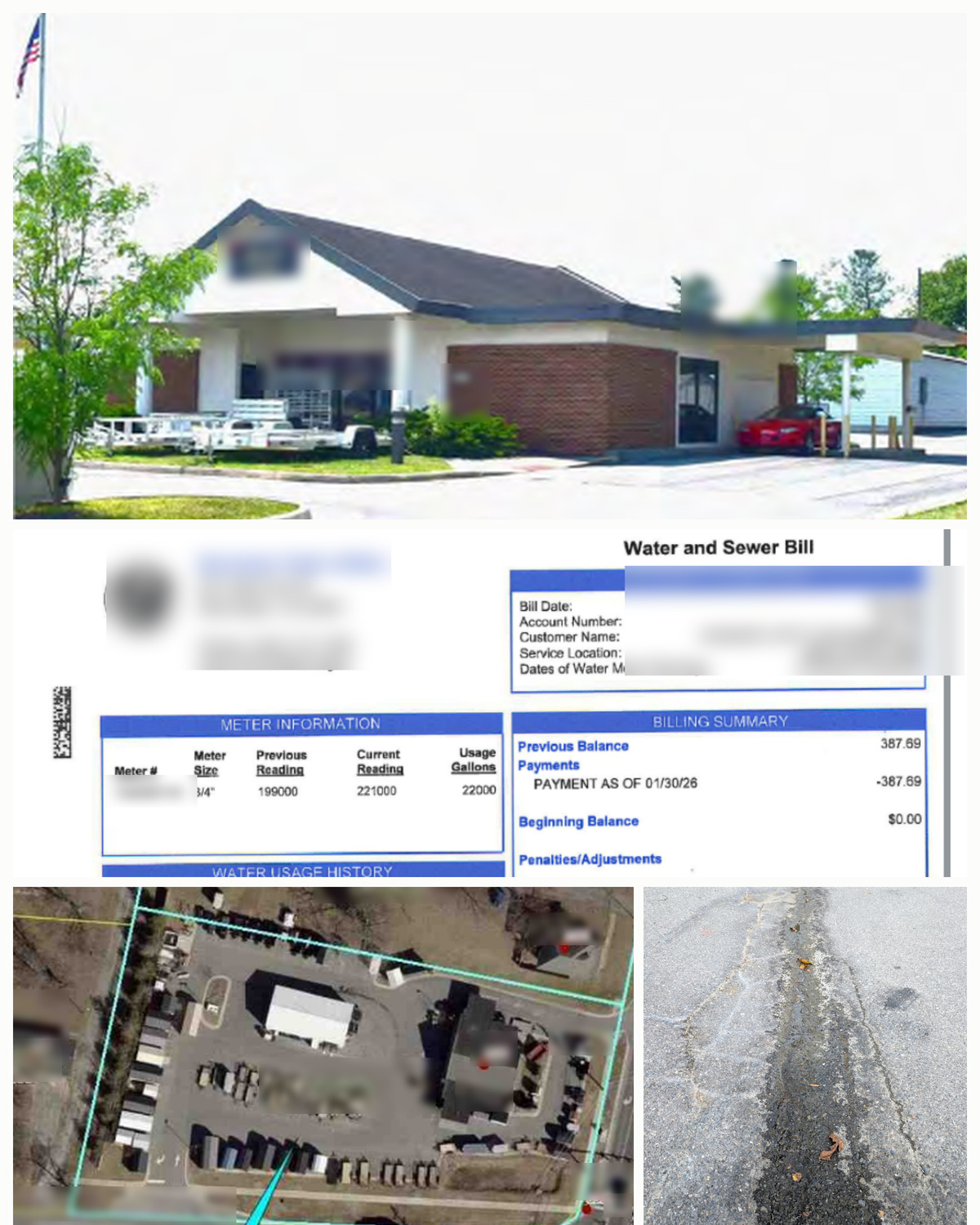
For me, the best AI use cases are the ones that send chills. Maybe not quite Navier Stokes, but rather about a water bill.
Small single tenant retail/IOS property in Virginia I'd redeveloped from an old bank building. Truck accessories and outdoor storage. Water bill runs 1,000 gallons a month for seven years. Then one month it says 22,000 gallons, and stays there. For months. Standing water in the parking lot, running in a line across the asphalt.
A leak, right.
Plumber goes out, finds nothing. Flurry of emails with the water company and the sewer utility, multiple meters. Public works, who had just serviced a main. Municipal codes, recent repairs. I referenced a meter serial number to the City's billing supervisor, and she pushed back telling me it did not match her records. She was right. Made things more confusing, not less.
Tons of AI document review later, everything was still inconclusive.
Which model I used made no difference. What did end up making a difference was broadening the context window. One folder holding all the PM and historical data on the asset, 500+ documents, plus basic markdown files: who I am, the project, what's already decided.
And sure enough, the system, after having settled in its new surroundings, seems to place an arm confidently on my shoulder. "Logan, there is no leak."
But wait, how can that be.
Take it easy. This solution needs several things to be true at once, it continued. The tenant had repaired a toilet valve four months earlier, which changed the baseline read. And the water company had been billing off the sewer company's meter, which was replaced three months ago, but the new serial number was never updated in the municipal system.
Not in a million years would I have gotten there on my own.
But it was not just that AI solved something beyond my horizon. It was watching how it adapted to the broader context by designing and testing its own model of the physical world (MY physical world).
"And by the way, Logan," it added, "the standing water? Get a $10 chlorine test strip from a pool supply company and dip it in. Chlorine means it came from the main. No chlorine means rain or sewer, which means none of it is connected."
I felt like I was watching it dance.
So I did as I was told. Walked out to the parking lot with the instructions my own AI system had just handed me, not knowing quite where all of this was going, only that it was the path in front of me.
Dipped it. Held it up against the sky. Nothing. No chlorine. So the line across the asphalt was a seam the water was coming up through. Not a pipe it was running out of.
There was never a leak. Not in the bill. Not in the parking lot.
I am about half way through The Freeze-Frame Revolution, by Peter Watts. Hard science fiction. A crew, a ship, and the AI that runs it, working out what they are to each other across deep time.
Which is about how that parking lot felt to me.
In short
- Does the AI model matter more than the context you give it?
- In this case the model made no difference at all. What changed the outcome was broadening the context: one folder holding all the property management and historical data on the asset, more than 500 documents, plus a few plain markdown files stating who I am, what the project is, and what has already been decided.
- How should property documents be organised so an AI can actually use them?
- One folder per asset containing everything, including leases, invoices, correspondence, utility records and photographs. Alongside it, a handful of plain text or markdown files giving the system its bearings. Not a database and not a tool. A folder and some context.
- Where is AI actually useful in asset management, as opposed to in principle?
- In reconciling contradictory records held by parties who each own only part of the picture. Here it established that a tenant's toilet valve repair four months earlier had changed the baseline read, and that the water company had been billing off the sewer company's meter, which had been replaced without the new serial number reaching the municipal system. Two facts, two organisations, neither holding both.
- What can it not do?
- Walk the site. The question was only settled by taking a $10 chlorine test strip out to a parking lot in Virginia and holding it up against the sky.